What Are .onion Addresses and How They Differ from Regular Domains
An .onion address is a special-use top-level domain that routes traffic through the Tor network. Unlike .com or .org domains, which resolve through standard DNS servers, .onion addresses are generated by the Tor software itself and exist only within the Tor network. Each .onion name is derived from a cryptographic public key, making it mathematically tied to the server's private key.
Traditional domain names are human-readable and managed by registrars. .onion names are not registered anywhere; they are generated locally by whoever sets up the hidden service. This decentralization means no central authority can seize or redirect an .onion address, but it also means names are cryptographically random and difficult to remember. A v2 .onion address is 16 characters long; v3 addresses (the current standard) are 56 characters, making them far more secure against brute-force attacks.
V2 Versus V3 Onion Addresses: The Naming Evolution
The Tor Project deprecated v2 .onion addresses in 2021 because their shorter length made them vulnerable to computational attacks. V2 names like thehiddenwiki2345.onion were easier to remember but weaker cryptographically. V3 addresses, introduced in 2017, use stronger elliptic-curve cryptography and are 56 characters long, such as thehiddenwiki7g5h4k2m9n8p1q3r5s7t9u2v4w6x8y0z1a2b3c4d5e6f7g8h9i0j1k2l3m4n5o6p.onion.
Most legitimate onion sites have migrated to v3. If you encounter a v2 address, it may be outdated or abandoned. The Tor Project documentation recommends treating v2 links with caution. Checking whether a site has published a v3 address is one way to verify it is actively maintained. Many phishing clones continue to use v2 addresses because they are easier to generate and remember, making them a red flag for users who know what to look for.
Why Onion Names Are Cryptographically Random and Hard to Remember
Because .onion addresses are derived from public keys, they cannot be chosen or customized the way a domain name can. A site operator generates a key pair, and the public key is hashed to produce the .onion name. This randomness is a feature, not a bug: it prevents name squatting, domain hijacking, and centralized control. However, it makes names unmemorable and difficult to share verbally.
This naming problem has created a market for vanity .onion addresses. Some operators run brute-force generators to find keys that produce .onion names with recognizable prefixes, such as starting with a word or acronym. This process is computationally expensive but possible. The trade-off is that vanity generation takes time and resources, so most onion sites simply accept their random names. Users typically access onion sites via bookmarks, QR codes, or links shared through PGP-signed announcements rather than by typing the address from memory.
How Phishing Clones Exploit Naming Confusion
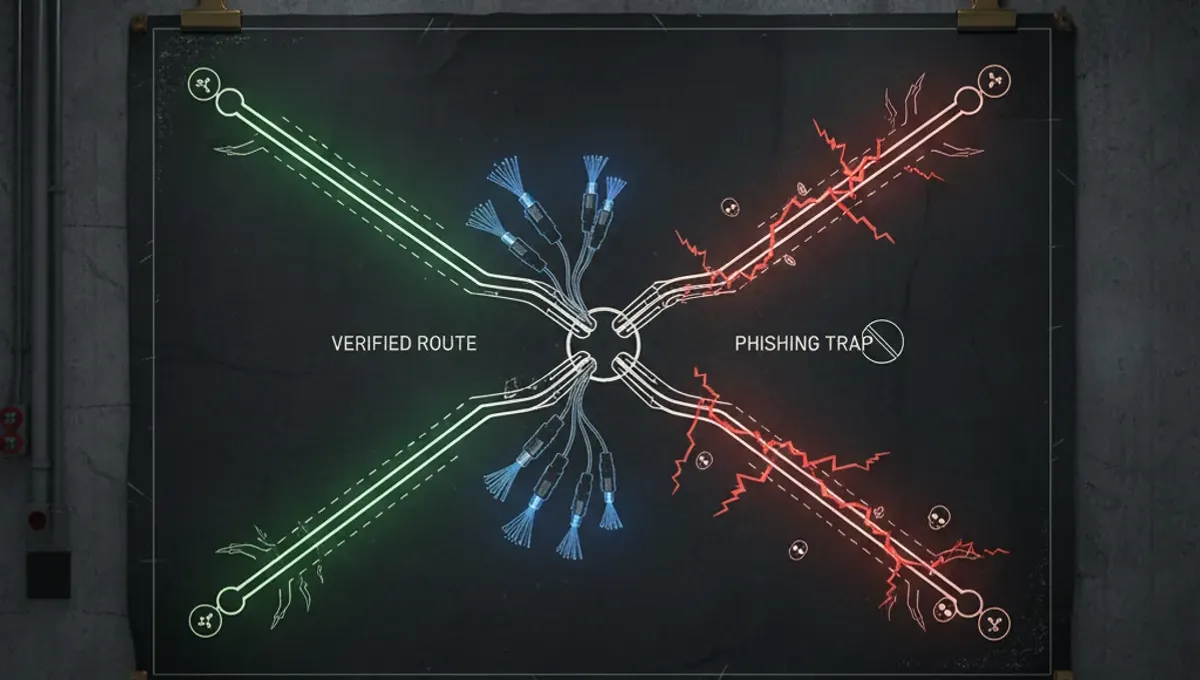
Because .onion names are random and difficult to verify visually, phishing attackers create fake copies of popular onion sites with similar-looking addresses. For example, if a legitimate marketplace uses a v2 address, a scammer might generate dozens of v2 addresses until one looks superficially similar, then host a clone that mimics the real site's appearance. Users who mistype or misremember the address, or who click a malicious link, land on the fake site and enter their credentials or send cryptocurrency.
This attack is especially effective because many users do not know how to verify an .onion address. They assume that if a site looks right and the URL is close enough, it must be legitimate. Legitimate projects publish their official .onion addresses on their clearnet websites, in PGP-signed announcements, and in community forums. If you cannot find an official announcement of the address, do not trust it. Always cross-reference the address across multiple independent sources before logging in or sending funds.
Reality Layer: How Naming and Verification Actually Work in Practice
The Tor Project documentation emphasizes that .onion addresses should be treated as cryptographic identifiers, not as human-readable names. This means verifying an address requires checking its cryptographic signature or finding it published on an official, authenticated channel. Many users skip this step and rely on visual similarity or word-of-mouth, which is why phishing succeeds.
Law-enforcement agencies have seized onion sites by compromising the server itself, not by hijacking the .onion name. This means a seized site's address remains valid but now points to a law-enforcement mirror or is taken offline. Security vendors and researchers have documented that phishing clones of popular dark web marketplaces and forums appear within days of the original site gaining attention. The lesson: a memorable or official-sounding name is not proof of legitimacy. Only a cryptographic signature or a PGP-signed announcement from a trusted source can confirm you are accessing the real site.
How to Verify an Onion Address Before Trusting It
Follow these steps to verify an .onion address:
- Find the official clearnet website or social media account of the project or service.
- Look for a PGP-signed announcement of the .onion address, or a link to it on the official site.
- If the site publishes a public key, verify the signature of the announcement using that key.
- Cross-reference the address on multiple independent sources (official site, Reddit communities, security blogs) to ensure consistency.
- Check whether the address is v3 (56 characters) or v2 (16 characters); v3 is current and more secure.
- Visit the site only through a fresh Tor Browser session, never through a link in an email or chat.
- Bookmark the verified address and use only the bookmark for future visits.
If you cannot find an official, cryptographically signed announcement of the address, treat the site as unverified. Do not log in, do not send funds, and do not assume it is legitimate based on appearance alone.
Dark Web Browsers and Domain Lists: Tools for Safe Navigation
A dark web browser list typically refers to Tor Browser, which is the official and recommended tool for accessing .onion sites. Other tools like Tails (a live operating system) and Whonix (a virtual machine) provide additional isolation and security. These tools do not change how .onion names work, but they reduce the risk of deanonymization or malware infection while you navigate.
A dark web domain list or dark web combo list is usually a collection of .onion addresses, sometimes with descriptions. These lists circulate on Reddit, GitHub, and pastebin-style sites. Treat any list with skepticism: addresses change, sites go offline, and lists are frequently outdated or include phishing clones. The safest approach is to verify each address independently rather than trusting a list wholesale. If a list includes addresses without PGP signatures or official sources, use it only as a starting point for your own verification, not as a definitive directory.
What You Can Do Today to Navigate Safely
Start by installing Tor Browser from the official Tor Project website. Before accessing any .onion site, spend five minutes searching for its official announcement or PGP-signed address. Bookmark only verified addresses and never click .onion links from untrusted sources. If you are researching dark web markets, forums, or services for security awareness or academic purposes, use the Useful Resources page on this site to find vetted links and guides.
Remember that a memorable name or official-sounding address proves nothing. The only proof is a cryptographic signature or a consistent appearance across multiple independent, trusted sources. This single habit of verification will protect you from the vast majority of phishing attacks and scams that exploit naming confusion on the dark web.
Frequently asked questions
What does .onion mean and why do dark web sites use it
.onion is a special-use top-level domain that routes traffic through the Tor network. Sites use it because .onion addresses are decentralized, cannot be seized by a central authority, and are cryptographically tied to the server's private key. This makes them ideal for hidden services that prioritize anonymity and resistance to censorship.
How can I tell if an onion address is real or a phishing clone
Verify the address by finding it on the official clearnet website, in a PGP-signed announcement, or across multiple independent trusted sources. Never assume an address is legitimate based on appearance alone. If you cannot find an official, cryptographically verified source for the address, do not trust it.
What is the difference between v2 and v3 onion addresses
V2 addresses are 16 characters and were deprecated in 2021 due to cryptographic weaknesses. V3 addresses are 56 characters and use stronger elliptic-curve cryptography. Most legitimate onion sites have migrated to v3. If you encounter a v2 address, it may be outdated or a phishing clone.
Can I memorize an onion address or do I need to bookmark it
V3 onion addresses are 56 characters long and impractical to memorize. Bookmarking verified addresses is the safest approach. If you need to share an address, use a QR code or a PGP-signed link rather than typing it manually, which reduces the risk of typos leading you to a phishing clone.
Where can I find a reliable list of dark web sites and their onion addresses
No single list is completely reliable because addresses change, sites go offline, and lists often include outdated or phishing clones. The Useful Resources page on this site provides vetted links and guides. Always verify each address independently using official sources rather than trusting a list wholesale.